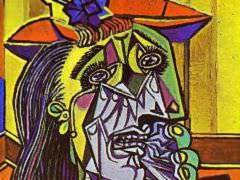
The Weeping Woman, 1937 by Pablo Picasso
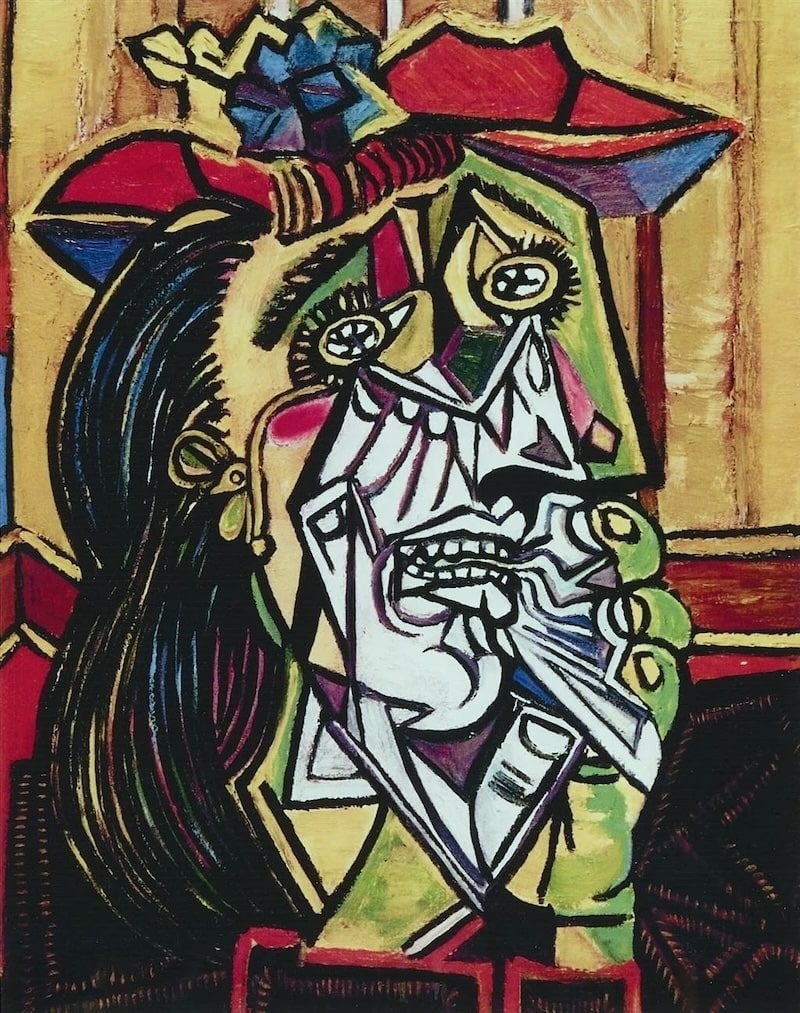
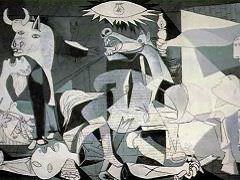
The Weeping Woman series is regarded as a thematic continuation of the tragedy depicted in Picasso's epic painting Guernica. In focusing on the image of a woman crying, the artist was no longer painting the effects of the Spanish Civil War directly, but rather referring to a singular universal image of suffering.
Picasso's insistence that we imagine ourselves into the excoriated face of this woman, into her dark eyes, was part of his response to seeing newspaper photographs of the Luftwaffe's bombing of Guernica on behalf of Franco in the Spanish civil war on April 26, 1937. The Weeping Woman, 1937 came at the end of the series of paintings, prints and drawings that Picasso made in protest. It has very personal, Spanish sources. In May 1937 Picasso's mother wrote to him from Barcelona that smoke from the burning city during the fighting made her eyes water. The Mater Dolorosa, the weeping Virgin, is a traditional image in Spanish art, often represented in lurid baroque sculptures with glass tears, like the very solid one that flows towards this woman's right ear. Picasso's father, an artist, made one for the family home.
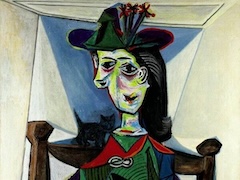
The model for the painting, indeed for the entire series, was Dora Maar, who was working as a professional photographer when Picasso met her in 1936; she was the only photographer allowed to document the successive stages of Guernica while Picasso painted it in 1937.
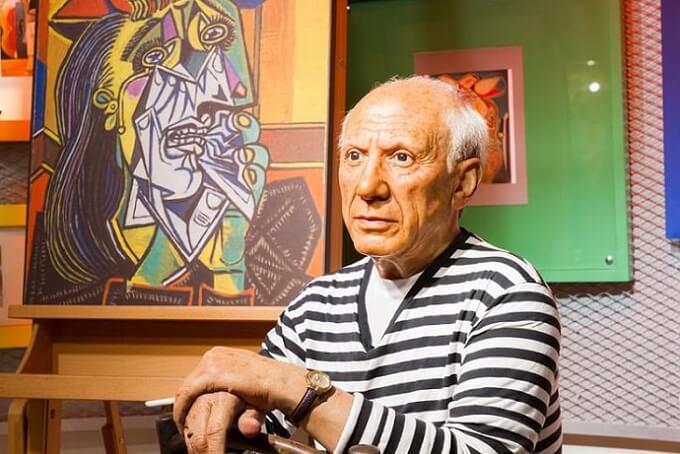
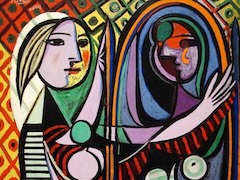
Dora Maar was Picasso's mistress from 1936 until 1944. In the course of their relationship, Picasso painted her in a number of guises, some realistic, some benign, others tortured or threatening. Picasso explained:
For me she's the weeping woman. For years I've painted her in tortured forms, not through sadism, and not with pleasure, either; just obeying a vision that forced itself on me. It was the deep reality, not the superficial one... Dora, for me, was always a weeping woman....And it's important, because women are suffering machines.”